Tuesday, 2 February 2010

Vignette This Year In Bulgaria Is a Bargain

Well there's a change, not only no inflation for this year's vignette (road tax), but an extra month thrown in due to technical difficulties. You can count on most Bulagrian's using that extra month in delaying the purchase of the vignette and I was not different actually putting it on my Lada windscreen on Sunday the 31st January. Next year what are the chances of getting another bargain?

All vehicles using the Bulgarian road network need to display a valid 2010 vignette as of February 1, otherwise they risk a fine of between BGN 100 and BGN 1 000.

The only roads exempt from the need for a vignette are those in cities and ring-roads, towns and villages.

In December, it had been announced that a consortium between EIBank and VIP Security would distribute the road vignette stickers in Bulgaria for the next four years.

There were delays in setting up the distribution system, and in the printing of the vehicle tax stickers. The Bulgarian Road Infrastructure Agency (RIA) had extended the validity of 2009 vignettes to 13 months.

In addition to the traditional outlets for buying vignettes – border crossings and petrol stations, they can now be purchased online. The operating consortium has published an e-shopping site, in Bulgarian and English, with payments online and delivery of the sticker by courier.

The site contains comprehensive information, and is accessible at www.vinetka.com. Vignette costs remain at the levels of 2009, despite a short-lived proposal to raise the levels to plug some of the shortfall in revenue of the RIA.

Monday, 1 February 2010

Bulgaria Not The Most Corrupt In The European Union

I would go along with this statement and say that Italy are probably the most corrupt EU country. It is always those who know noting about Bulgaria and Romania that criticise and point fingers. Yes there is corruption for sure, but anyone would think that the rest of the EU are white as white. A lot of corruption in western Europe we just don't hear about as it is covered up very well.


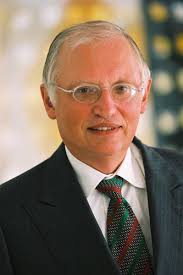
Günter Verheugen, European Commissioner for Enlargement at the time when Romania and Bulgaria were preparing for the EU accession, defended these countries by saying that they were not the most corrupt states in the European Union.
I think these countries are being treated unfairly when they are reproached with being corrupt, their administrations not being operational and the crime making the law, said Verheugen.
If I were asked what the most corrupt EU country was, I would not first think of Romania and Bulgaria. And if I were asked in what country the organized crime did have the most powerful influence on the governmental policy, again I would not first think of Romania and Bulgaria, he told the Phoenix TV show.
The current Commissioner for Industry, who is at the end of his mandate, did not want to nominate the countries he would think of first, when it came to corruption and organized crime, but he added that you could easily recognize them.

Sunday, 31 January 2010

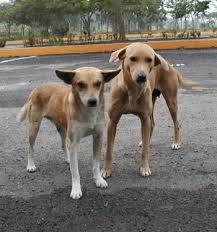
Stray dogs are a common sight in towns and cities in Bulgaria. There have been attacks on humans with gangs of dogs that have the courage in numbers. There has been a tagging process over the last year or so, but this doesn’t solve the problem. My own opinion is that stray dogs should be put down, but that is too politically sensitive and because of this more incidents of attacks from dog will persist.


Zoo director Ivan Ivanov says an unknown number of dogs leapt through a fence and attacked eight mouflon, four fallow deer and a doe.

Ivanov told The Associated Press on Saturday the incident occurred last week and was the most serious in the zoo's recent history. He believes freezing temperatures and hunger had driven the dogs.
Two fallow deer and one mouflon managed to escape and survived before security guards intervened. The dogs also escaped.
Ivanov said that new animals of the same species have been already transported to Sofia. The zoo is the largest in the country with 1,310 animals of 274 different species.

Source: http://www.foxnews.com/story/0,2933,584379,00.ht

Saturday, 30 January 2010

Borisov Prevents Bulgaria's Tobacco Industry Going Up In Smoke

Good one Boyko! Take the bull by the horns and sort it out is exactly what he has done. Politics is too fancy sometimes Boyko Borisov certainly is not in that fold. It is so refreshing to see direct and effective action to resolve disputes like this. Tobacco is a big industry in Bulgaria and the money lost from disputes like this doesn't help in a recession. With a conspiring opposition party making waves Boyko did good.


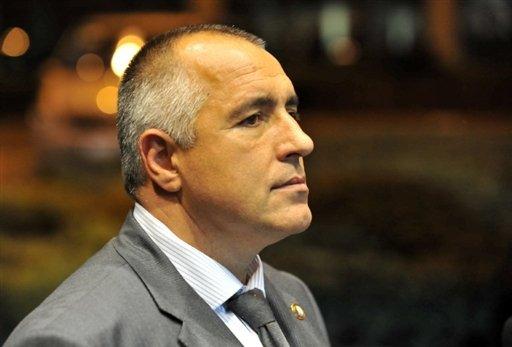
Boyko Borisov, confirmed that he is set to replace the entire leadership of the so-called Tobacco Fund. The changes are forthcoming in the next few weeks while he is waiting only for the results of the probe.
The PM also said he had made an agreement with tobacco growers and producers that they designate 3-representatives to be appointed as members of the Monitoring Board of the Fund.
Borisov further reiterated his Wednesday statements, January 27th that the tensions among tobacco growers are politically motivated and the Bulgarian Socialist Party (BSP) is behind the unrest.
The tobacco farmers had a mass protest rally scheduled for Thursday, but they canceled it after a midnight meeting with Borisov. (Between 15 000 and 20 000 Bulgarian tobacco producers were making preparations for a protest planned for Thursday morning. They were blockade the Danube Bridge crossing to Romania, and the border checkpoints with Greece.
“I made commitments and everything I promised is going on; we are working on getting more money,” Borisov declared.
Meanwhile, the Agriculture Ministry informed they have signed an agreement with the National Tobacco Growers Union 2009.

Friday, 29 January 2010

Less Beer Drunk By Bulgarians in 2009

67 litres of beer a year! That's just over a litre a week. I bet that this figure would equate more to the amount of home made rakia drunk than beer. The cost is paramount here and the price of beer rose last year. In a recession where do the brewers who have a mandate for increased profits year in year out what did they expect. Everyone I know here in Bulgaria drink at home, it is cheaper, like I said cost is everything here.


Five of the six major breweries in Bulgaria declared a decline in retail sales for 2009 amounting to about 11 per cent on average compared to the previous year, the Union of Bulgarian Breweries said in a media statement, cited by Bulgarian media, on January 28 2010.
The average Bulgarian consumes about 67 litres of beer annually, while total beer production in the country for 2009 amounted to five million hectolitres.
"The primary reason why we incurred a decrease this season is attributed to the decline of sales in restaurants and hotels, as more people opt for drinking at home," Vladimir Ivanov, head of the UBB, was quoted as saying by Dnevnik daily.
The industry expects further decline in 2010 in the range of three to five per cent.
Currently, 3070 people are employed in the Bulgarian beer industry, but breweries are contemplating further job cuts in 2010, Dnevnik said.
Total investments in the sector in 2009 amount to about 66 million leva, and there are eight major beer breweries in the country overall. BBU members are Bolyarka, Zagorka, Kamenitsa, Carlsberg Bulgaria and Lomsko Pivo.
The only brewery in Bulgaria that is not a member of the BBU is Ledenika Beer.
Beer sold in plastic bottles was consumers' preferred choice, with more than 48 per cent of the total market share, while beer sold in classic half-litre bottles amounted to 42.5 per cent. Draught beer accounted for a meagre 5.5 per cent of the total market, while canned beer was bottom with four per cent.
About 72 per cent of Bulgarians preferred to drink at home, compared to 28 per cent who opted for pubs and/or restaurants, Dnevnik said.
Source: http://www.sofiaecho.com